
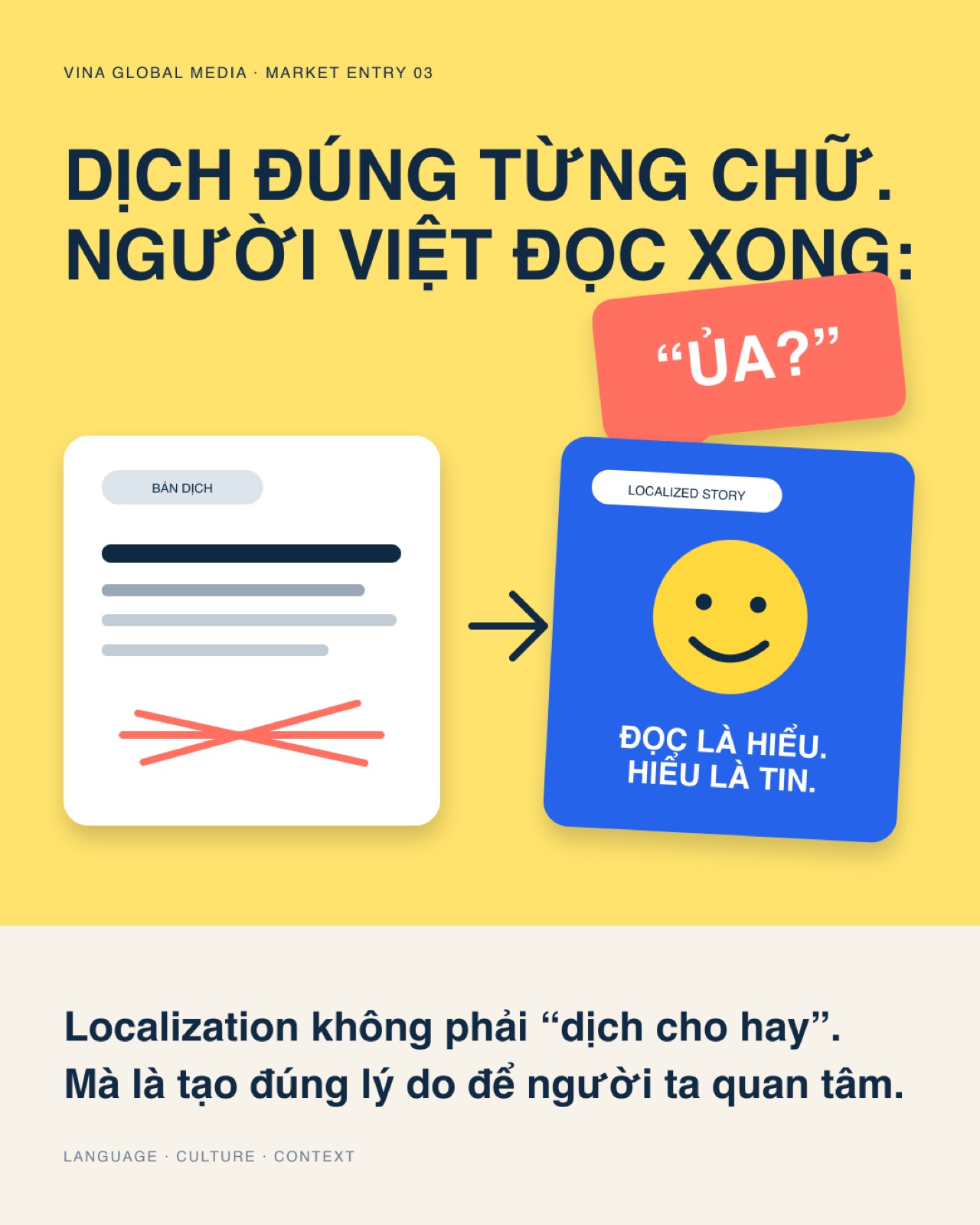
Content can be accurate word for word and still be wrong for the market. Translation answers, “What does this sentence mean?” Localization must answer several more questions.
Would local people say it this way?
Correct grammar does not always create a natural voice.
Do they care about this?
A benefit that stands out in the original market may not be a purchase driver in Vietnam.
Is the content right for the platform?
A brand cannot appear in the same way across media, Facebook, TikTok and KOL content.
Does the message fit the cultural and commercial context?
Pricing, consumer habits, seasonality, trust and decision-making all shape how a story should be told.
Localization is therefore not a final language-processing step. It should begin when selecting the insight, message, channel, storyteller, visuals and CTA.
An international brand does not need to become a Vietnamese brand. But it must show that it understands Vietnamese audiences before asking the market to trust it.
Leave a Reply