Blog

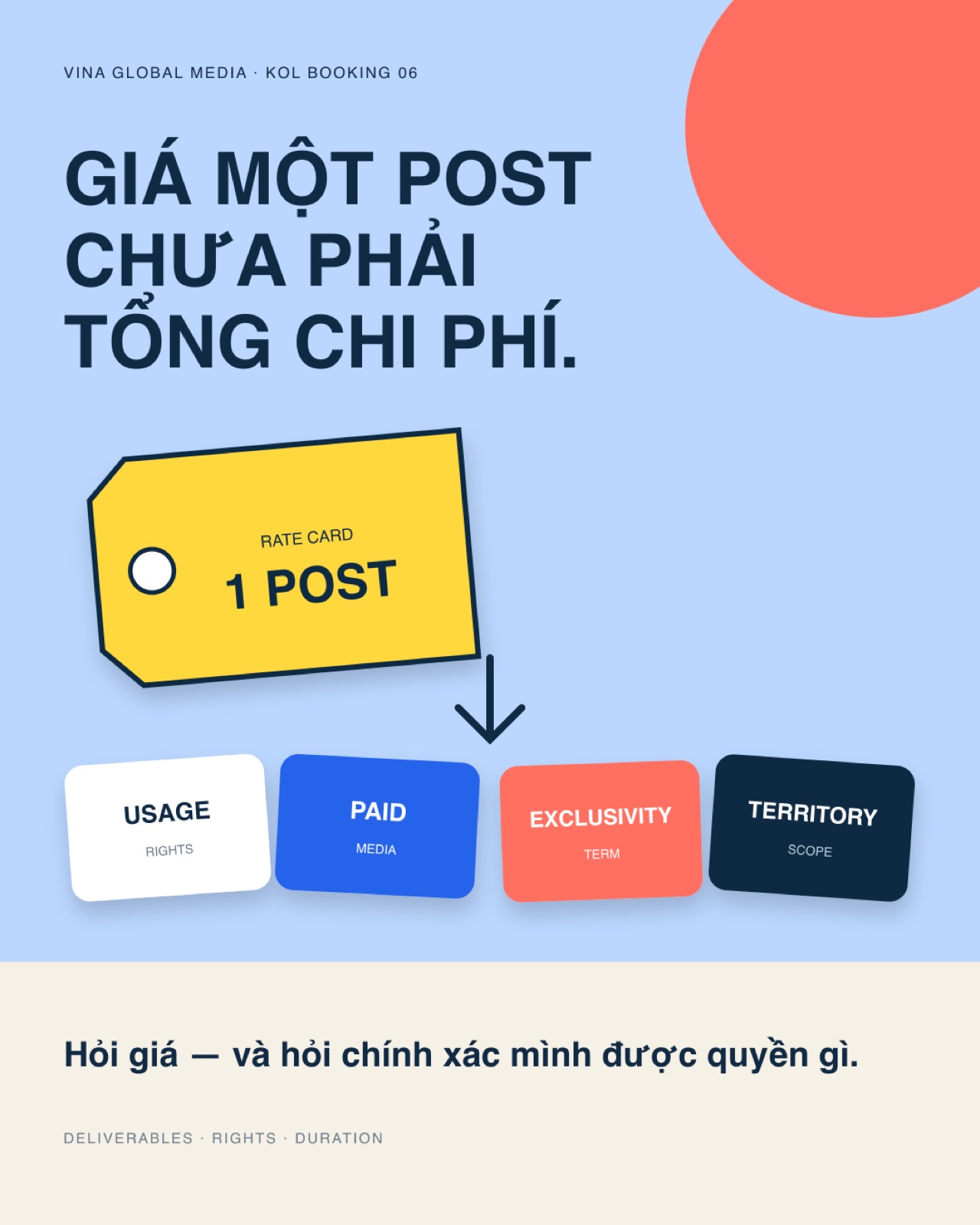
  • KOL Booking: The Price of One Post Is Not the Total Cost

    KOL Booking: The Price of One Post Is Not the Total Cost

    A creator quote often begins with a deliverable: one TikTok video, one Reel, one Facebook post or three Stories. The real budget, however, also depends on the rights a brand wants after the content is published.

    Usage rights

    Can the brand reuse the video on its social pages, website, e-commerce channels or event screens?

    Paid media rights

    Can the content be used for advertising or whitelisting through the creator’s account?

    Exclusivity

    How long must the creator avoid working with competitors, and how is the competing category defined?

    Usage period and territory

    Do the rights last one month, six months or forever? Does an agreement in Vietnam also cover Thailand, South Korea or the entire region?

    A low rate card can become expensive when additional rights were not agreed from the start. Before asking, “How much does this creator cost?”, ask, “Exactly which rights are included in that price?”
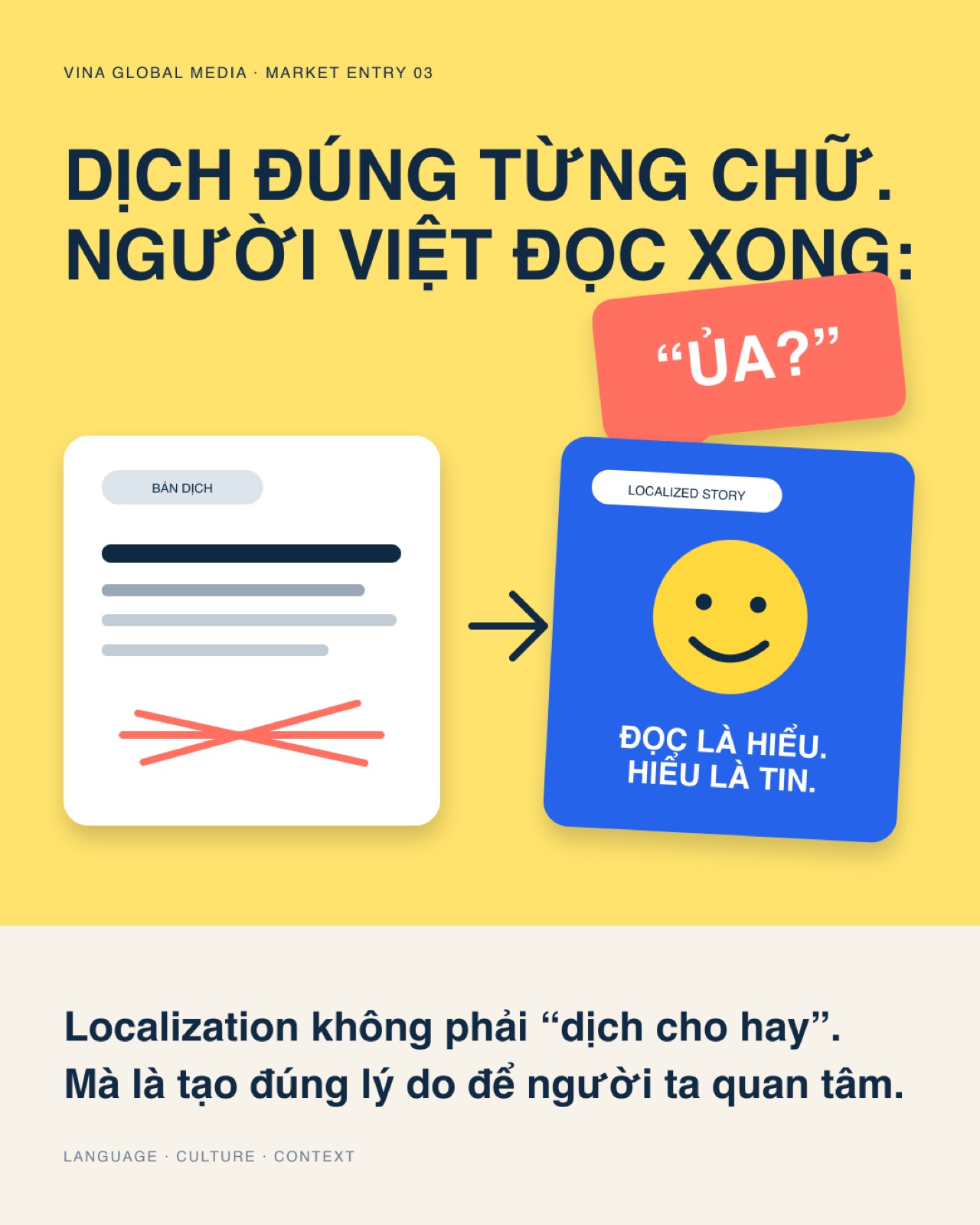

  • Translation Is Not Localization

    Translation Is Not Localization

    Content can be accurate word for word and still be wrong for the market. Translation answers, “What does this sentence mean?” Localization must answer several more questions.

    Would local people say it this way?

    Correct grammar does not always create a natural voice.

    Do they care about this?

    A benefit that stands out in the original market may not be a purchase driver in Vietnam.

    Is the content right for the platform?

    A brand cannot appear in the same way across media, Facebook, TikTok and KOL content.

    Does the message fit the cultural and commercial context?

    Pricing, consumer habits, seasonality, trust and decision-making all shape how a story should be told.

    Localization is therefore not a final language-processing step. It should begin when selecting the insight, message, channel, storyteller, visuals and CTA.

    An international brand does not need to become a Vietnamese brand. But it must show that it understands Vietnamese audiences before asking the market to trust it.

  • When Should a Business Invest in International Media?

    When Should a Business Invest in International Media?

    Not every business needs to appear in overseas media immediately. International media should, however, be considered when a company is preparing for one of the following objectives.

    Entering a new market

    Build credible sources of information before approaching local customers or partners.

    Attracting international travellers

    Destinations, hotels, resorts or events may want to reach visitors from a specific country.

    Building an international brand

    Help overseas customers find and verify reliable information about the brand.

    Launching an international product or project

    Introduce the offering in a context that is relevant to the local market.

    Strengthening credibility with potential partners

    A clear base of media information can make a company profile more persuasive.

    Credibility should be built before a company needs to rely on it—not after the market has already started asking questions.

  • One Strategic Partner, Multiple Asian Markets

    One Strategic Partner, Multiple Asian Markets

    International communications can become complex very quickly. A company entering several markets may need to coordinate different agencies, editors, translators and media systems, each with its own language, process and expectations.

    A single strategic point of contact reduces this complexity, but only when it combines two capabilities: regional consistency and local execution.

    Regional consistency protects the brand

    The company needs a clear central message, shared objectives and a consistent standard for how the brand is represented across markets.

    Local execution creates relevance

    Each story still needs to be adapted for the language, culture, editorial practices and audience interests of the target country. One coordination point should not mean one standard package applied everywhere.

    For businesses expanding across Asia, this model can reduce common barriers:

    • Selecting credible publications in unfamiliar markets.
    • Working across languages and time zones.
    • Coordinating different editorial processes.
    • Maintaining message consistency while localising content.
    • Managing evidence of publication through one reporting process.

    VINA Global Media currently focuses on China, India, Japan, South Korea, Taiwan, Thailand and Vietnam, coordinating market-specific media solutions through one strategic point of contact.

    The value is not simply convenience. It is the ability to protect a regional brand narrative while making every execution locally credible.

  • One Story, Three Markets, Three Different Approaches

    One Story, Three Markets, Three Different Approaches

    The destination may be the same, but content for South Korea, Taiwan and Thailand should not be executed in exactly the same way.

    In each market, the team must consider the travel interests of local readers, publication timing, suitable media outlets, headline style and the images most likely to create an emotional response.

    Consistent brand, flexible storytelling

    The core message may remain consistent, but the editorial angle and context must reflect local audience interests.

    This is how international media can support destinations, hotels, resorts and tourism authorities in building an overseas presence: one story can travel across countries, but it must be told in the language of each market.

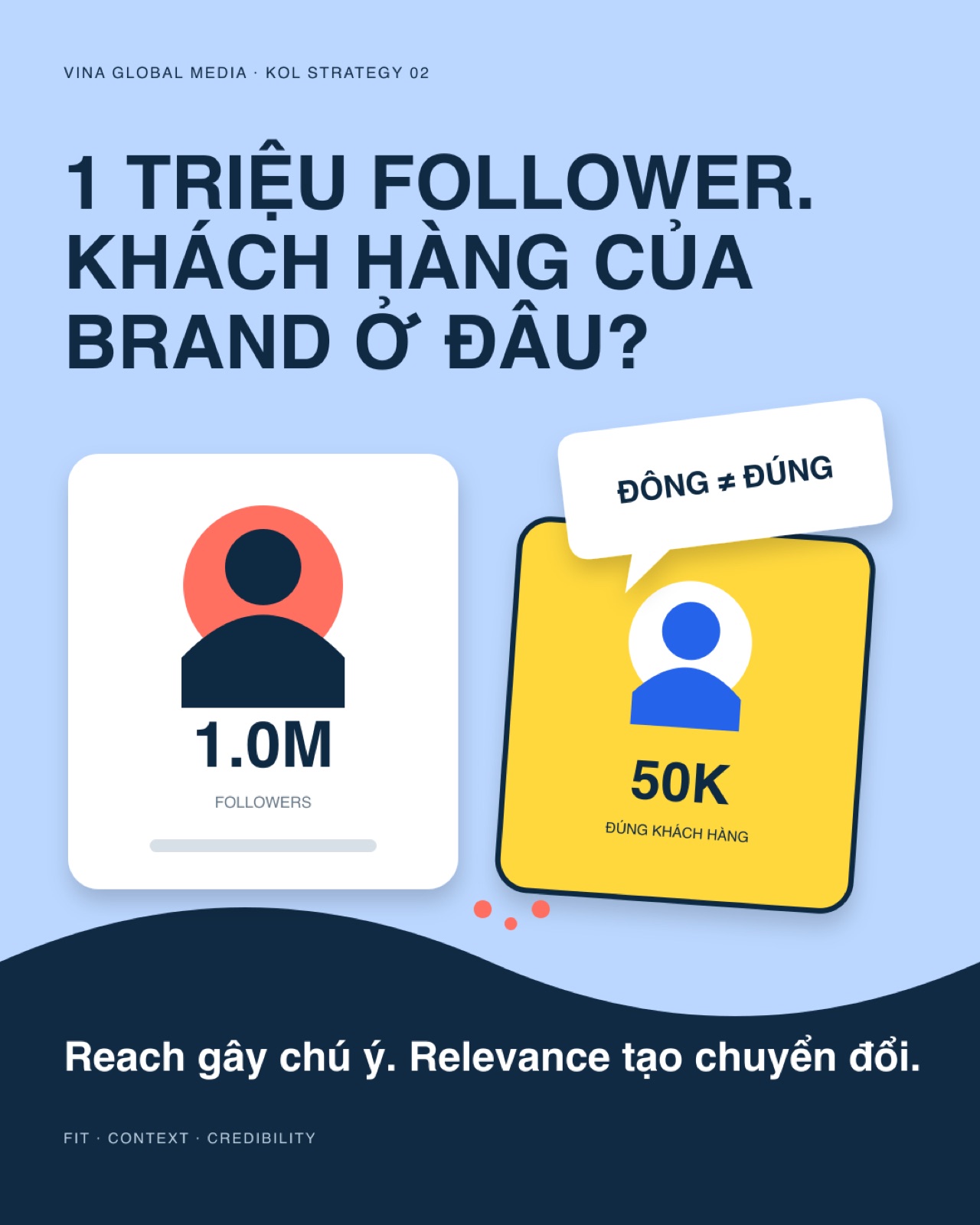
  • Why a KOL with 1 Million Followers Can Lose to a 50,000-Follower Creator

    Why a KOL with 1 Million Followers Can Lose to a 50,000-Follower Creator

    Follower count is a signal for further investigation, not a reason to confirm a booking. A suitable creator should pass at least four layers of evaluation.

    1. Audience fit

    Does the creator’s audience overlap with the customers the brand needs to reach? A smaller community concentrated in the right market can be more valuable than a large but scattered following.

    2. Content fit

    Can the product appear naturally within the creator’s content world? If the creator must completely change their voice to include it, the audience will notice.

    3. Trust and brand safety

    What is the creator trusted for? Their content history, controversies, advertising frequency and previous brand partnerships all affect suitability and safety.

    4. Campaign fit

    Is the objective awareness, consideration, conversion or content creation? A creator who makes excellent videos may not be the best person to drive sales—and vice versa.

    Choosing KOLs by follower count is like hiring solely by years of experience: quick and easy to compare, but likely to miss what actually drives results. The better question is not “Who is the most famous?” but “Who can make the right audience care about this story?”

  • International Media Requires More Than Translation

    International Media Requires More Than Translation

    A translation can be linguistically accurate and still fail as communication.

    Readers in every market have different expectations, cultural references, editorial habits and standards of credibility. A headline that feels persuasive in one country may appear overly promotional in another. A detail that is newsworthy in Vietnam may have little relevance to media in South Korea or Japan.

    Three layers of international media content

    1. Linguistic translation: The language must be accurate and natural.
    2. Cultural localisation: The story should reflect what local readers care about and how they interpret information.
    3. Editorial adaptation: The content must fit the standards, tone and structure of the target publication.

    Skipping the second and third layers is one of the most common reasons international content feels generic, promotional or disconnected from its audience.

    Local editors and in-market partners add value not because they simply know the language, but because they understand context. They know which angle can earn attention, which claims require support and which details should be reframed or removed.

    The objective is not merely to publish a story in another language. It is to make that story credible in another market.

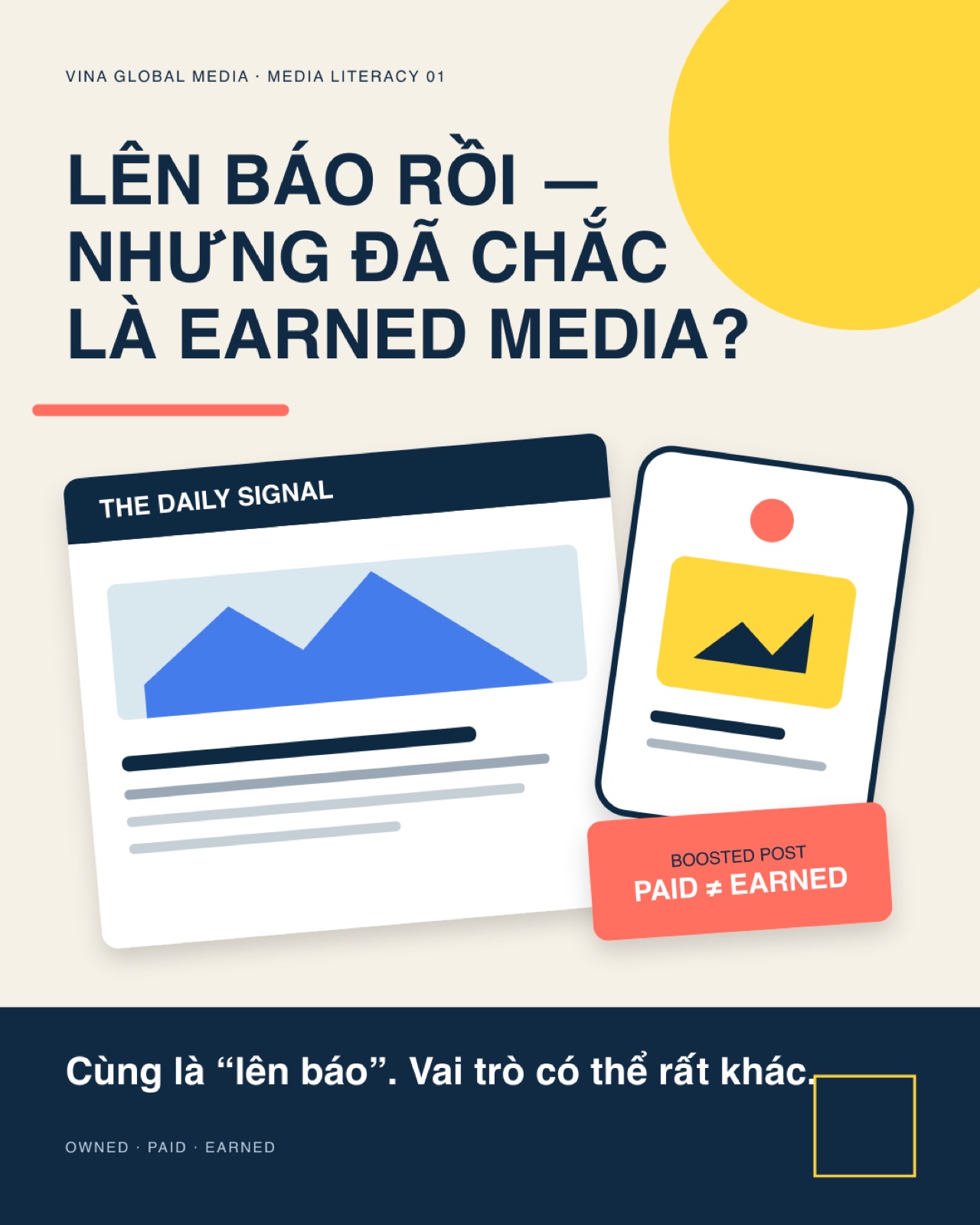
  • Not Every Media Placement Is Earned Media

    Not Every Media Placement Is Earned Media

    A brand appearing in the media does not automatically mean it has earned organic coverage. In communications, three concepts are often grouped together: Owned Media, Paid Media and Earned Media.

    Owned Media — channels controlled by the brand

    Websites, social pages, newsletters and accounts directly managed by the company. The brand decides the content, timing and presentation.

    Paid Media — paid visibility

    Advertising, sponsored content and other forms of budget-backed distribution. A company purchases reach, placement or visibility.

    Earned Media — attention created by news value

    The brand is mentioned by media, communities or third parties because the story matters to their audience—not simply because the company wants to talk about itself.

    Paid does not mean less credible. Earned does not mean the brand loses all control. The important point is understanding what each channel provides:

    • Paid Media buys speed and control.
    • Owned Media builds the brand’s information foundation.
    • Earned Media creates third-party validation.

    A strong communications strategy does not choose only one. It assigns the right role to all three throughout the journey of building awareness and trust.

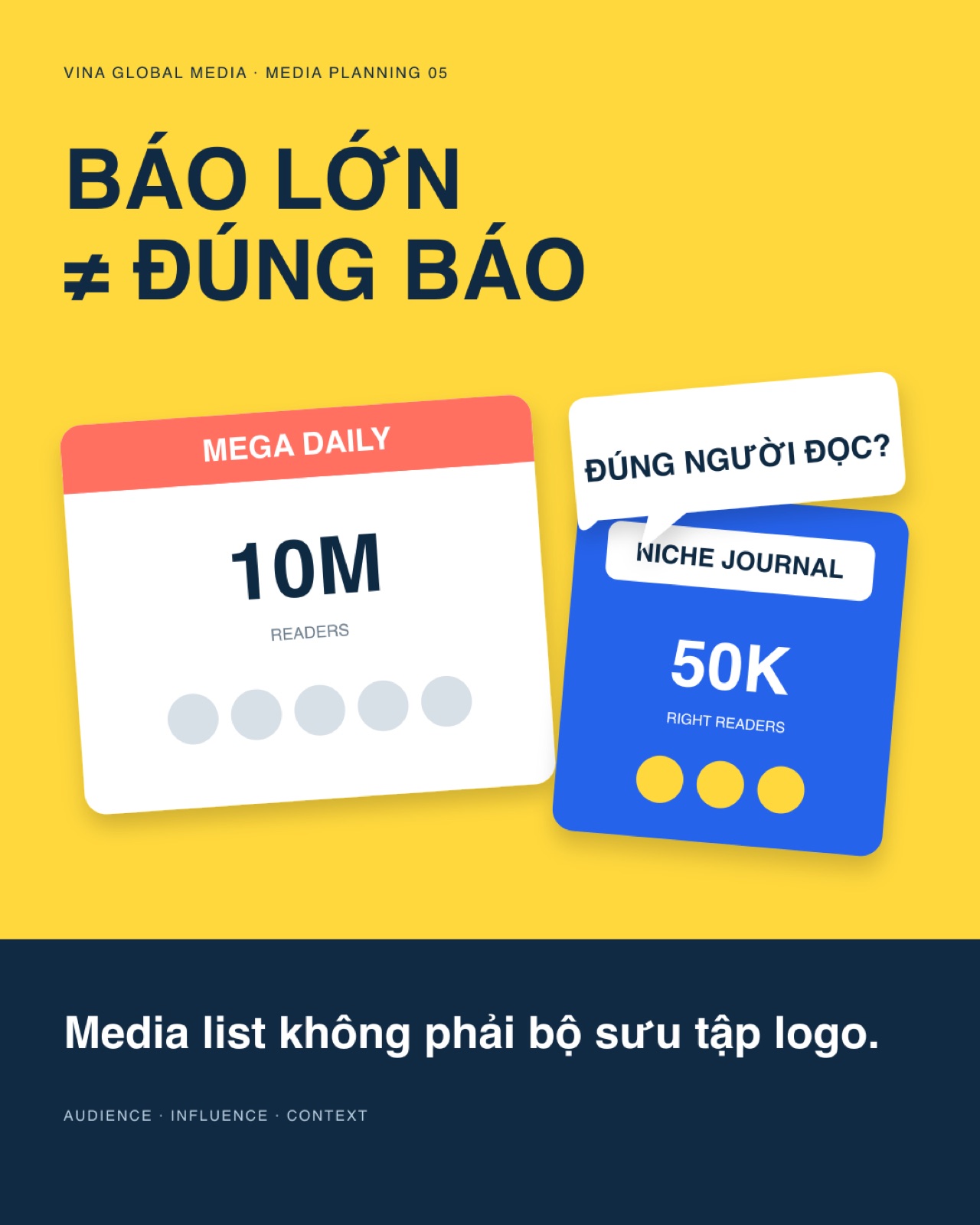
  • Is a Bigger Publication Always Better for Your Brand?

    Is a Bigger Publication Always Better for Your Brand?

    Not necessarily. A publication may reach millions of readers and still fail to bring a brand closer to the people it actually needs to reach.

    When selecting media for an international campaign, size is only one layer of evaluation. At least four other questions matter more.

    Who reads the publication?

    A mass-market outlet can deliver broad reach, while a specialist travel, business or lifestyle publication may connect the story with a more relevant audience.

    Does it influence the target market?

    A globally famous name is not always the source local audiences read and trust most often.

    Does the editorial angle fit the section?

    A strong publication cannot rescue an irrelevant story. Choosing the right section can be as important as choosing the right outlet.

    Does the brand need reach or specialist credibility?

    These two objectives can lead to entirely different media lists.

    Media planning is not a contest to collect famous media logos. It is the work of matching the right story with the right audience and the sources that genuinely influence them.

  • What Value Can International Media Coverage Create for a Business?

    What Value Can International Media Coverage Create for a Business?

    Media coverage is not designed to generate immediate sales like advertising. Its greatest value lies in creating a credible source of information through which customers, partners and the market can verify a brand.

    Building credibility

    Customers are often more confident when information about a brand appears in a reputable media outlet.

    Supporting visibility on Google

    International articles help build a body of credible information and support a more trustworthy search presence. This is not a guarantee of SEO rankings.

    Supporting market expansion

    Media coverage creates a foundation of awareness before a company approaches customers, distributors or partners in a new market.

    Reaching international travellers

    For the tourism industry, local media can introduce destinations, hotels, resorts and experiences to relevant target audiences.

    One article cannot replace an entire marketing strategy. However, an international strategy without credible information sources will find it difficult to build long-term trust.