
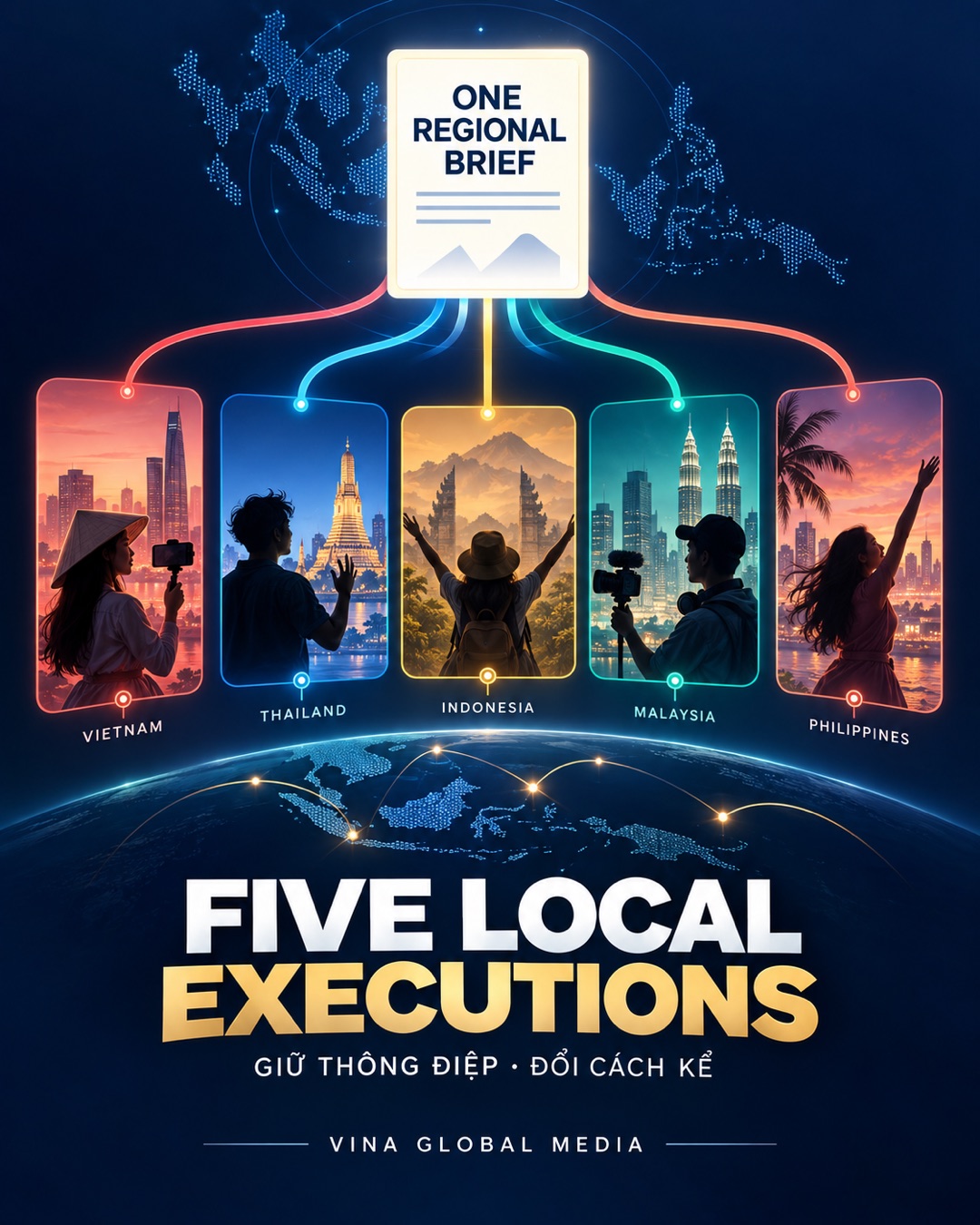
Running a creator campaign across several countries does not mean duplicating one brief. Brands need to protect the core message while giving content enough room to fit each market’s language, culture and platform behaviour.
What should remain consistent
- The campaign objective and the creator’s role in the customer journey.
- Product value, mandatory facts and permitted claims.
- Brand safety, category rules and prohibited statements.
- Deliverables, deadlines, revision rounds and content usage rights.
- Measurement, acceptance and reporting principles.
What should be localized
Hooks, forms of address, length, settings, examples and pacing should fit the market. A format that feels natural on Vietnamese TikTok may not translate directly to communities in Thailand, Indonesia, Malaysia or the Philippines.
Brands should also consider each market’s preferred platforms, creator profiles and audience response patterns. Strong localization does not change the core message; it makes that message feel more natural and relevant locally.
Localization is more than translation
Translation helps creators understand the request. Localization helps them understand why local viewers should care. These are different tasks.
When every creator must repeat the same sentence, use the same example and follow the same pacing, the content may satisfy the guideline while still feeling foreign. A strong regional brief provides a clear common framework and enough flexibility for creators to express it through local language and culture.
The role of regional coordination
A regional point of contact protects the message, tracks progress and standardizes acceptance. Local partners help verify language, culture and natural delivery. Effective campaigns need both.
VINA Global Media helps Korean companies select, book and coordinate creators across Southeast Asia through one strategic point of contact. Contact us to discuss your brief structure and priority markets.
Leave a Reply