Category: International Media

Insights on international press strategy and media opportunities across Asia.

  • India’s 2026 festival season: Communications opportunities for Vietnamese brands

    India’s 2026 festival season: Communications opportunities for Vietnamese brands

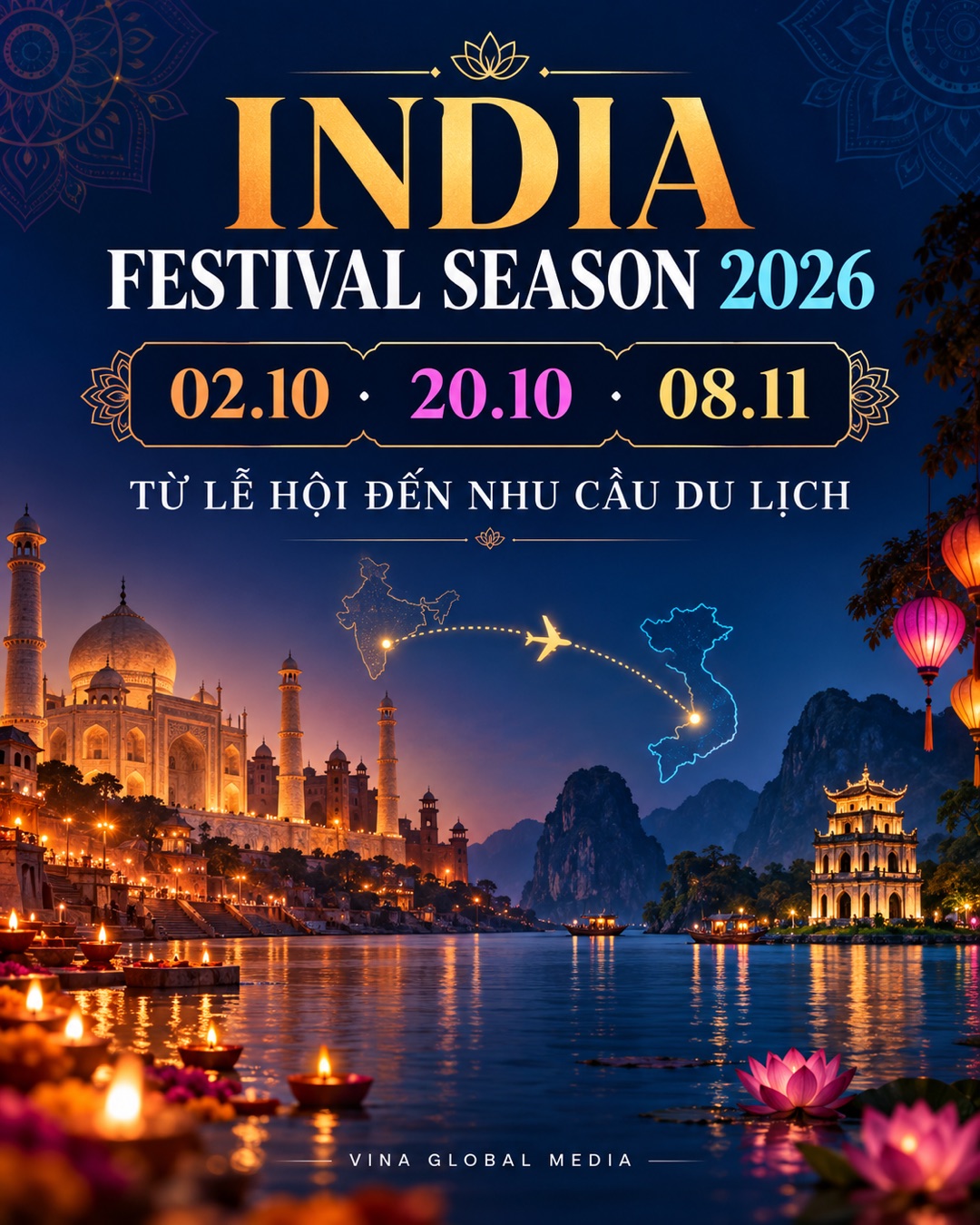
    India’s year-end calendar includes several important cultural and religious dates. Under the Central Government holiday schedule, Gandhi Jayanti falls on October 2, Dussehra on October 20 and Diwali on November 8, 2026. For Vietnamese businesses, the opportunity lies in understanding the market beyond a simple list of holidays.

    India is not one uniform market

    Holiday practices and the importance of individual festivals can vary by state, community and organization. Diwali has broad relevance, but celebrations and consumer behaviour are not identical in every region.

    Campaigns should therefore define geography, language, income segment, travel interests and communications objectives. A generic message for “Indian travellers” is often too broad to feel relevant.

    Useful themes for Vietnamese businesses

    • Family and multi-generational travel.
    • Resorts, destination weddings and premium services.
    • Food options that reflect vegetarian or religious requirements.
    • Shopping, entertainment and shareable experiences.
    • Clear information about visas, flights, payments and services.

    English translation is not a complete strategy

    English may be widely used, but effective communication still depends on the right story angle, imagery and channel for each audience. Brands need to understand what is newsworthy and which sources local users consider credible.

    Turn the calendar into a content sequence

    The October–November dates can support a series rather than a one-off post: an early market insight, an experience-led article and a cultural or holiday message closer to the date. This creates a more natural brand presence without relying only on direct sales content.

    VINA Global Media helps Vietnamese businesses select markets, publications and localization approaches across Asia. Contact us to discuss a focused India communications scope before implementation.

    Sources: India Post — All India Holidays 2026; Government of India holiday schedule.

  • What Is PR — and Why It Is More Than Media Coverage

    What Is PR — and Why It Is More Than Media Coverage

    What Is PR — and Why It Is More Than Media Coverage

    When a company says it “needs PR,” the first request is often a media placement, a launch event, or a story that can attract attention. These activities may be part of public relations, but they do not represent the whole discipline.

    If PR is measured only by the number of articles published, a business can easily overlook the more important questions: Who are we trying to build a relationship with? What do they currently believe about us? What would make them trust us?

    A practical definition of public relations

    The Public Relations Society of America defines PR as a strategic communication process that builds mutually beneficial relationships between organizations and their publics. The Chartered Institute of Public Relations similarly emphasizes planned and sustained efforts to establish goodwill and mutual understanding.

    These definitions highlight three essential characteristics.

    First, PR is a process, not a one-off activity. An article, press conference, or creator campaign is one touchpoint within a longer relationship.

    Second, PR is strategic. Communication should be connected to organizational objectives, market context, and the information needs of different stakeholders.

    Third, PR is two-way. Organizations do not simply broadcast messages. They listen, identify concerns, respond to feedback, and adjust their actions when necessary.

    Who are a company’s “publics”?

    In PR, the public does not mean everyone, and it does not mean customers alone. Every organization operates within an ecosystem of relevant groups, such as:

    • Current and prospective customers.
    • Employees and job candidates.
    • Partners, distributors, and suppliers.
    • Journalists, editors, and creators.
    • Regulators and industry associations.
    • Local communities.
    • Investors or other parties that influence business decisions.

    Each group has different expectations, questions, and levels of influence. A message that works for consumers may not answer a distributor’s concerns. A story that performs well on social media may not meet the editorial standards of a respected publication. PR helps a business prioritize the right audiences and communicate with each of them appropriately.

    Media relations is one part of PR

    Media relations matters because credible publications can help audiences discover and verify information through an independent source. However, a complete PR program may also include:

    1. Research and listening: Understanding how stakeholders perceive the company, its industry, and the issues around it.
    2. Message strategy: Defining how the company wants to be understood and what evidence supports that position.
    3. Media and creator relations: Connecting relevant stories with the right channels, markets, and communities.
    4. Internal communication: Helping employees understand the organization’s direction and contribute to a consistent brand experience.
    5. Community and stakeholder relations: Maintaining dialogue with groups that affect or are affected by the organization.
    6. Issues and crisis communication: Identifying risks early, preparing response processes, and protecting transparency when problems arise.
    7. Measurement and learning: Evaluating not only communication outputs but also changes in awareness, trust, and stakeholder behavior.

    What can PR contribute?

    PR cannot compensate for a poor product, unreliable service, or irresponsible corporate behavior. It also cannot guarantee that one article will generate immediate sales.

    What PR can do is create an information and relationship system that helps a business:

    • Become visible in a relevant context.
    • Be understood more accurately.
    • Provide credible information that customers and partners can verify.
    • Maintain dialogue with important stakeholders.
    • Respond more consistently when issues emerge.

    These functions become even more important when a company enters an international market. Differences in language, culture, editorial standards, and information behavior can make a message that works in Vietnam feel distant elsewhere. International PR is therefore not simply translation. It is the work of building relevance and trust within a new context.

    Where should a company begin?

    Before asking “Which publication should we choose?”, a business should answer four questions:

    1. What is the current communication objective?
    2. Which stakeholder group matters most right now?
    3. What does that group currently know, think, and feel about the company?
    4. What actions and evidence support the story the company wants to tell?

    The answers create a foundation for selecting messages, channels, and measurement methods. Media coverage then becomes a purposeful component of reputation building rather than the only destination.

    VINA Global Media supports international media relations across Asia, international KOL booking, and communication solutions for companies entering new markets. If your business is considering building a presence in a specific country, contact our team to clarify the objective, priority audiences, and appropriate route before selecting the channels.

  • China Golden Week 2026: Two nearby holiday windows for Vietnam tourism

    China Golden Week 2026: Two nearby holiday windows for Vietnam tourism

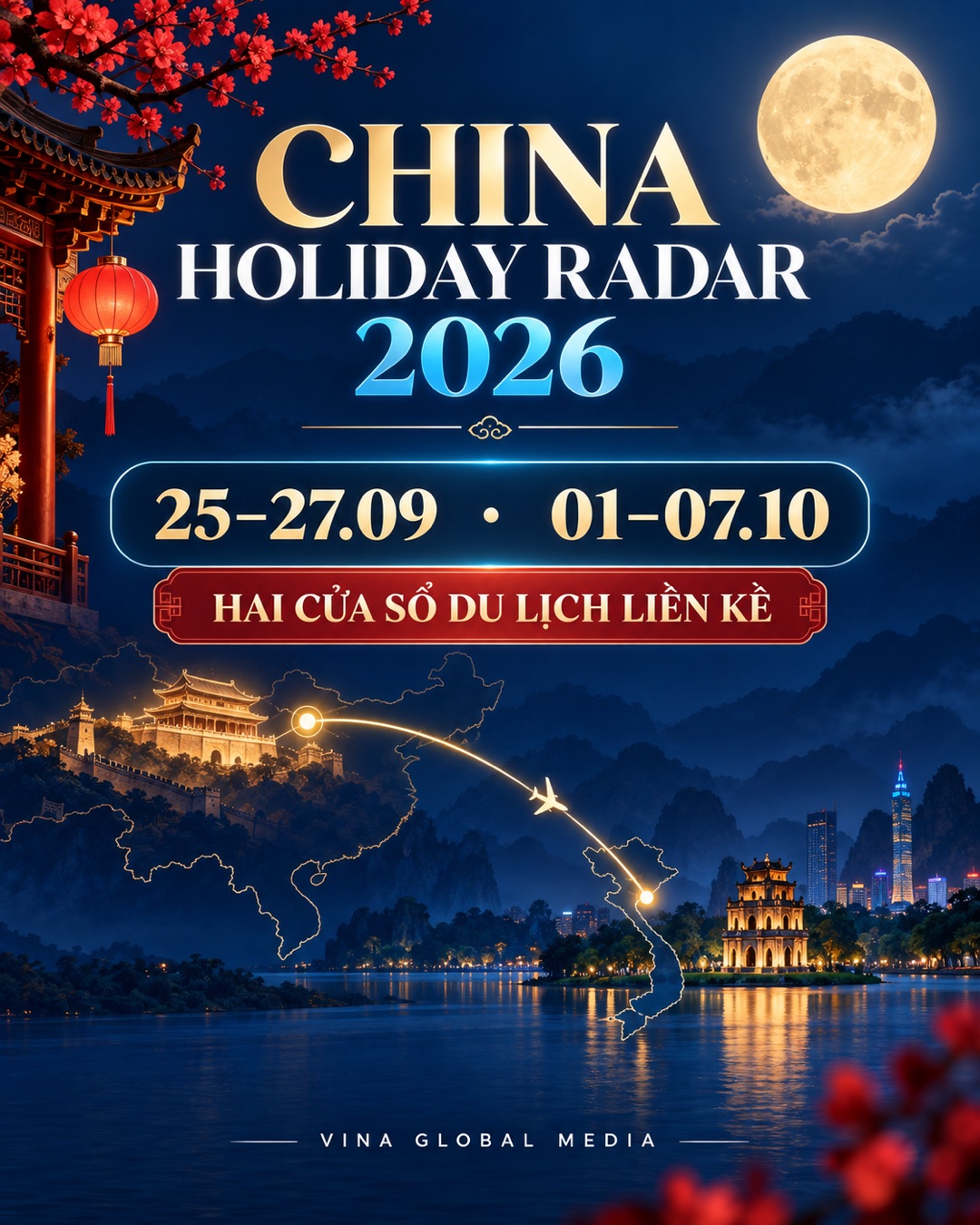
    China’s official 2026 calendar creates two holiday windows in close succession: the Mid-Autumn Festival from September 25 to 27 and the National Day holiday from October 1 to 7. September 28–30 remain working days, so this is not one continuous break. Even so, the short interval makes late September and early October an important communications season.

    Why should Vietnamese businesses monitor China’s calendar?

    China remains one of Vietnam’s major international visitor markets. Longer breaks provide more time for travel, while closely spaced festivals can increase attention around family activities, shopping, leisure and experiences.

    The calendar is not a guarantee of bookings. It is an input for timing. Outcomes still depend on the product, transport connectivity, pricing, messaging and the ability to reach the right audience.

    Four content themes to prepare

    1. Short itineraries and flexible plans for independent travellers.
    2. Family experiences, food, shopping and entertainment.
    3. Practical Chinese-language information about transport, payment and services.
    4. Credible local media coverage that helps audiences verify the destination or brand.

    When should communication begin?

    Campaigns designed to influence National Day travel should appear before October 1. Brands can structure communication in three stages: awareness, useful information for consideration, and a timely reminder closer to departure.

    A Vietnamese story needs a Chinese market context

    Translation is only the first step. Headlines, introductions, benefits and visuals should reflect local reader expectations. Selecting the right publication, format and timing matters more than distributing identical material as widely as possible.

    VINA Global Media helps Vietnamese businesses build credible international media presence across Asian markets. Contact us to discuss communications for China’s Golden Week or future travel seasons.

    Source: State Council of the People’s Republic of China — 2026 public holiday schedule.

  • One Brief for All of Asia: Efficient or a Recipe for Failure?

    One Brief for All of Asia: Efficient or a Recipe for Failure?

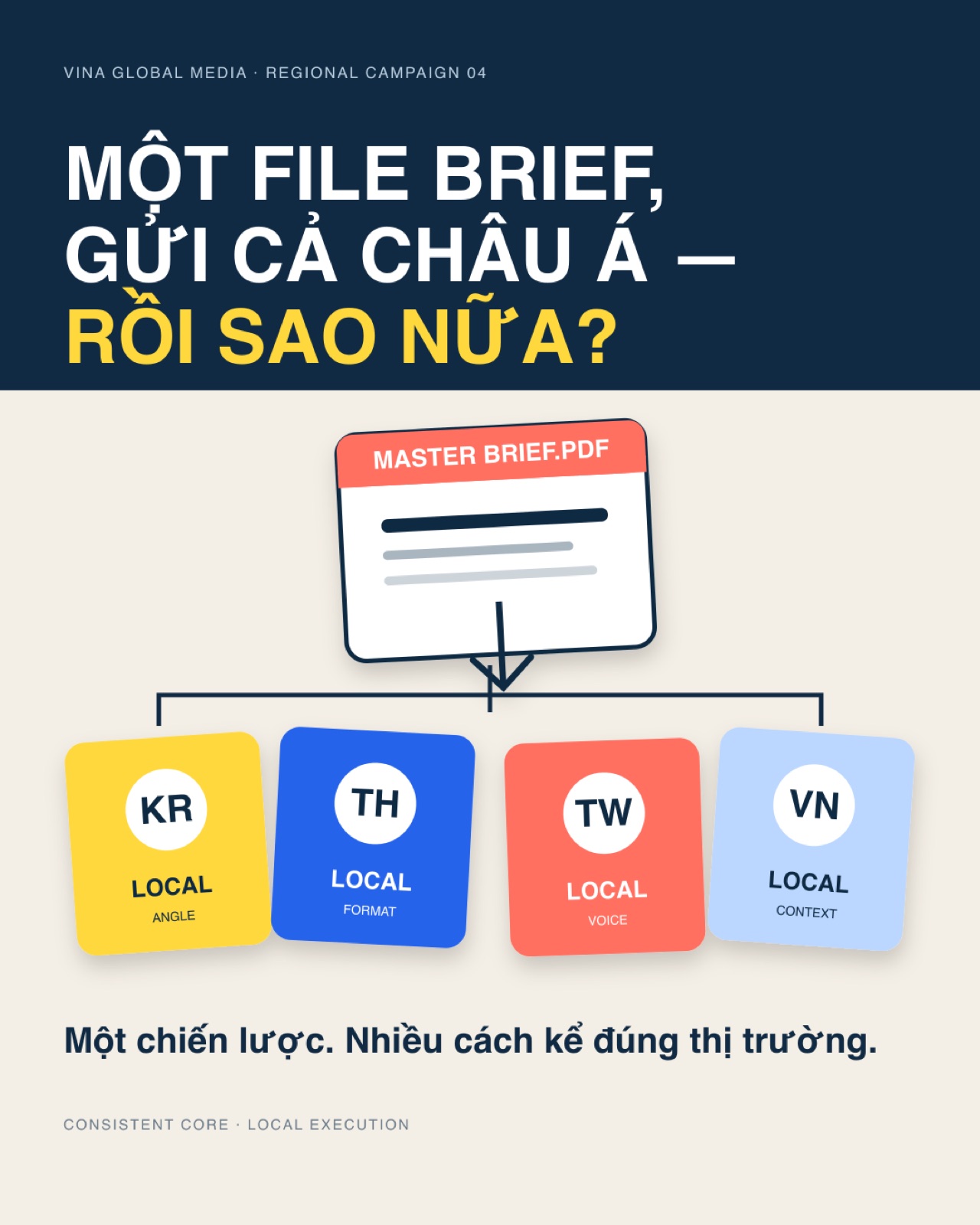
    Regional consistency matters. But consistency does not mean asking creators in Vietnam, Thailand, South Korea and Indonesia to read the same script.

    A strong regional brief should contain two zones.

    The non-negotiable zone

    • Campaign objectives
    • Brand promise
    • Mandatory product information
    • Legal and brand-safety requirements
    • Claims that must not be made

    The localization zone

    • Opening hook
    • Usage scenarios
    • How the product appears
    • Language and humour
    • Platform-appropriate format
    • CTA based on local behaviour

    If every word is controlled, a brand may protect consistency but lose the creator’s natural voice. If complete freedom is given without clear non-negotiables, the campaign risks becoming fragmented or creating messaging problems.

    A regional team’s capability is not measured by sending the same brief to several countries. It lies in knowing what must be protected—and what should be entrusted to the local market.

  • Which Businesses Is VINA Global Media Best Suited For?

    Which Businesses Is VINA Global Media Best Suited For?

    VINA Global Media is best suited for businesses seeking to build a presence in Asia without an in-market communications team or the need to coordinate multiple agencies across different countries.

    Tourism and destination businesses

    Hotels, resorts, attractions, destinations, events and travel brands seeking to reach international visitors.

    Vietnamese brands building international credibility

    Companies that need credible information sources customers and partners can easily find and verify.

    Businesses expanding into Asian markets

    Brands that need to establish awareness before approaching customers, distributors or partners.

    Teams that need flexible execution

    A company can begin with one market, one group of publications and one clearly defined objective.

    VINA Global Media brings 10 years of multinational communications consulting experience, with deep expertise in international media, alongside international KOL booking and Vietnam market-entry consulting.

  • KOL Booking: The Price of One Post Is Not the Total Cost

    KOL Booking: The Price of One Post Is Not the Total Cost

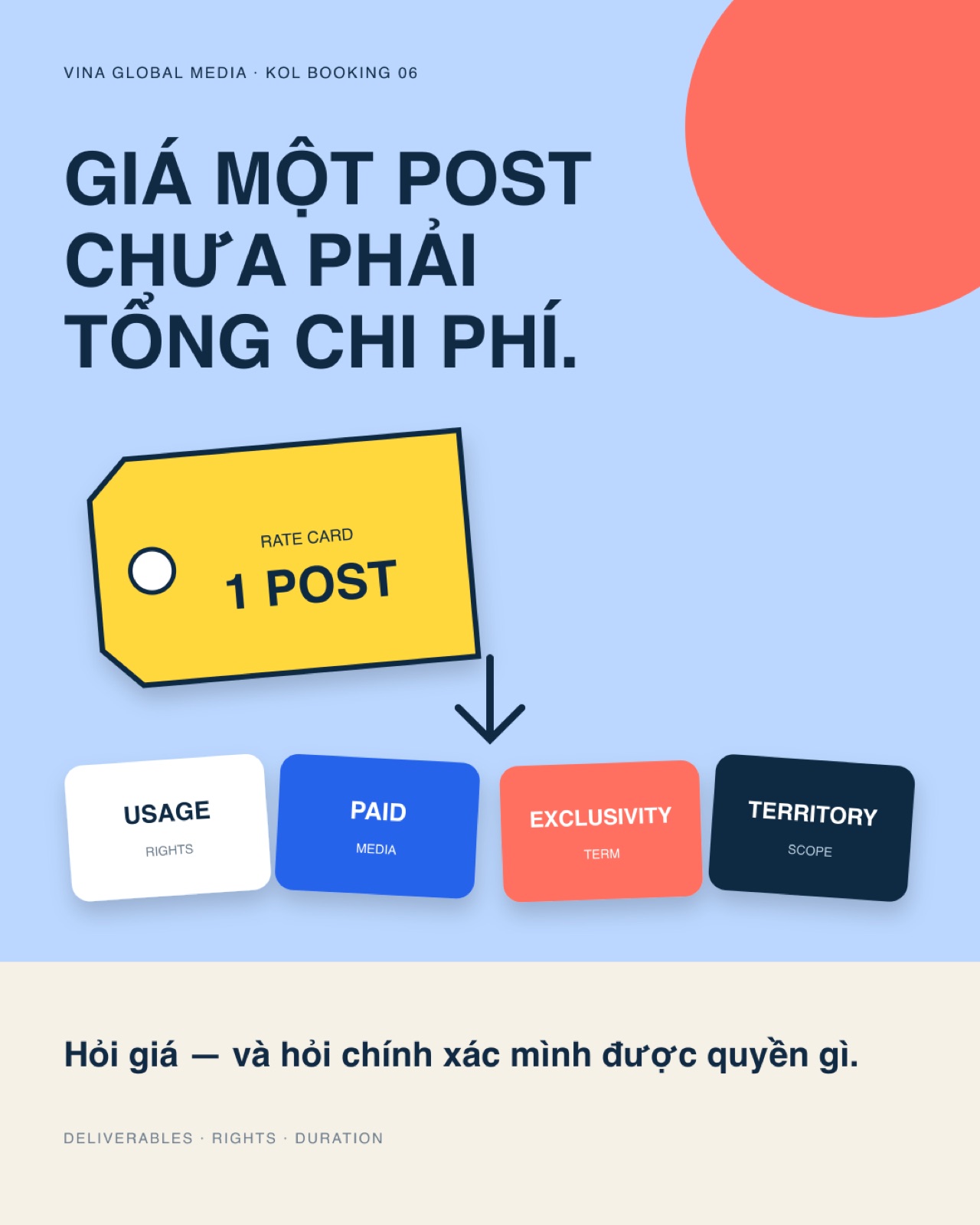
    A creator quote often begins with a deliverable: one TikTok video, one Reel, one Facebook post or three Stories. The real budget, however, also depends on the rights a brand wants after the content is published.

    Usage rights

    Can the brand reuse the video on its social pages, website, e-commerce channels or event screens?

    Paid media rights

    Can the content be used for advertising or whitelisting through the creator’s account?

    Exclusivity

    How long must the creator avoid working with competitors, and how is the competing category defined?

    Usage period and territory

    Do the rights last one month, six months or forever? Does an agreement in Vietnam also cover Thailand, South Korea or the entire region?

    A low rate card can become expensive when additional rights were not agreed from the start. Before asking, “How much does this creator cost?”, ask, “Exactly which rights are included in that price?”

  • Translation Is Not Localization

    Translation Is Not Localization

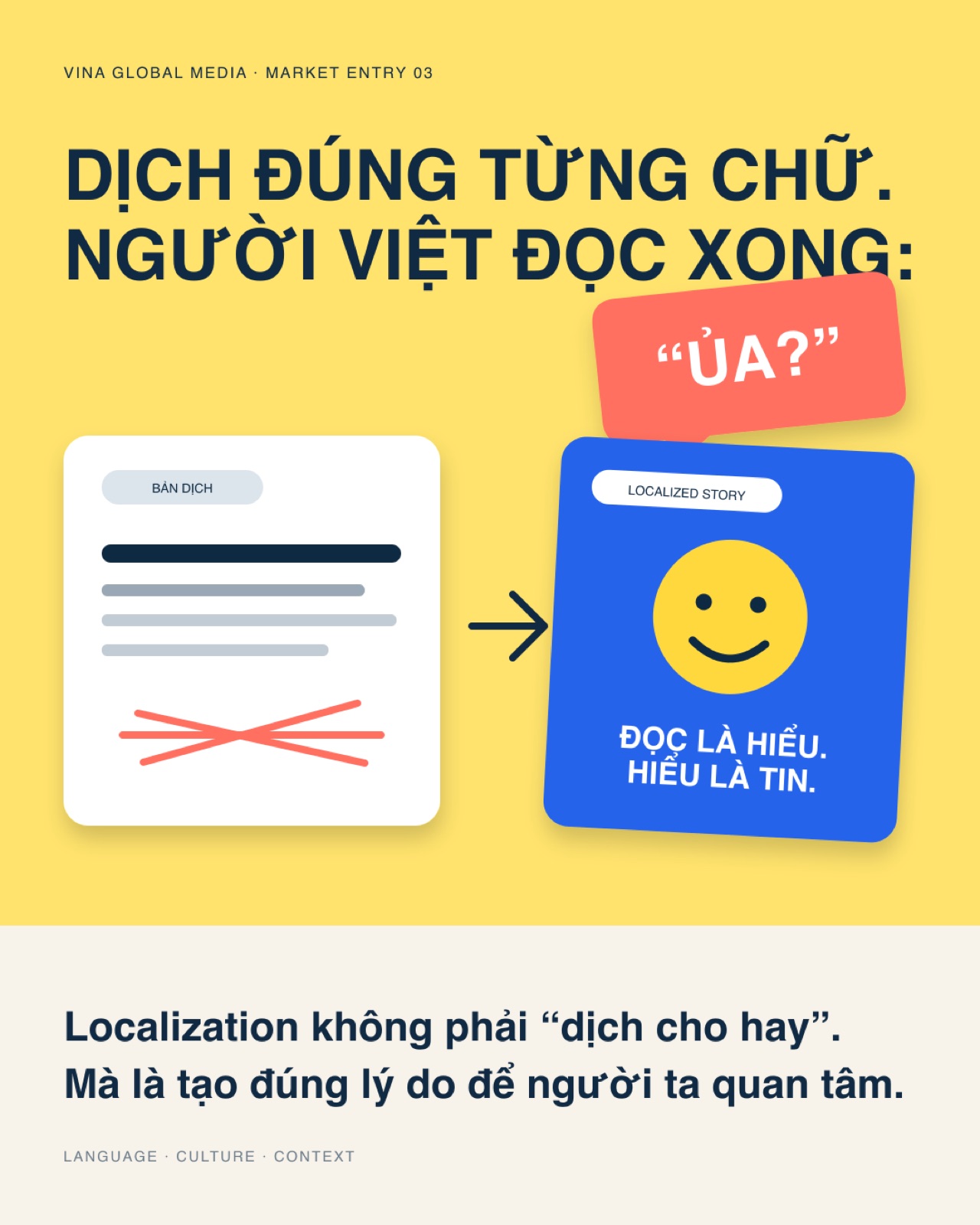
    Content can be accurate word for word and still be wrong for the market. Translation answers, “What does this sentence mean?” Localization must answer several more questions.

    Would local people say it this way?

    Correct grammar does not always create a natural voice.

    Do they care about this?

    A benefit that stands out in the original market may not be a purchase driver in Vietnam.

    Is the content right for the platform?

    A brand cannot appear in the same way across media, Facebook, TikTok and KOL content.

    Does the message fit the cultural and commercial context?

    Pricing, consumer habits, seasonality, trust and decision-making all shape how a story should be told.

    Localization is therefore not a final language-processing step. It should begin when selecting the insight, message, channel, storyteller, visuals and CTA.

    An international brand does not need to become a Vietnamese brand. But it must show that it understands Vietnamese audiences before asking the market to trust it.

  • When Should a Business Invest in International Media?

    When Should a Business Invest in International Media?

    Not every business needs to appear in overseas media immediately. International media should, however, be considered when a company is preparing for one of the following objectives.

    Entering a new market

    Build credible sources of information before approaching local customers or partners.

    Attracting international travellers

    Destinations, hotels, resorts or events may want to reach visitors from a specific country.

    Building an international brand

    Help overseas customers find and verify reliable information about the brand.

    Launching an international product or project

    Introduce the offering in a context that is relevant to the local market.

    Strengthening credibility with potential partners

    A clear base of media information can make a company profile more persuasive.

    Credibility should be built before a company needs to rely on it—not after the market has already started asking questions.

  • One Strategic Partner, Multiple Asian Markets

    One Strategic Partner, Multiple Asian Markets

    International communications can become complex very quickly. A company entering several markets may need to coordinate different agencies, editors, translators and media systems, each with its own language, process and expectations.

    A single strategic point of contact reduces this complexity, but only when it combines two capabilities: regional consistency and local execution.

    Regional consistency protects the brand

    The company needs a clear central message, shared objectives and a consistent standard for how the brand is represented across markets.

    Local execution creates relevance

    Each story still needs to be adapted for the language, culture, editorial practices and audience interests of the target country. One coordination point should not mean one standard package applied everywhere.

    For businesses expanding across Asia, this model can reduce common barriers:

    • Selecting credible publications in unfamiliar markets.
    • Working across languages and time zones.
    • Coordinating different editorial processes.
    • Maintaining message consistency while localising content.
    • Managing evidence of publication through one reporting process.

    VINA Global Media currently focuses on China, India, Japan, South Korea, Taiwan, Thailand and Vietnam, coordinating market-specific media solutions through one strategic point of contact.

    The value is not simply convenience. It is the ability to protect a regional brand narrative while making every execution locally credible.

  • One Story, Three Markets, Three Different Approaches

    One Story, Three Markets, Three Different Approaches

    The destination may be the same, but content for South Korea, Taiwan and Thailand should not be executed in exactly the same way.

    In each market, the team must consider the travel interests of local readers, publication timing, suitable media outlets, headline style and the images most likely to create an emotional response.

    Consistent brand, flexible storytelling

    The core message may remain consistent, but the editorial angle and context must reflect local audience interests.

    This is how international media can support destinations, hotels, resorts and tourism authorities in building an overseas presence: one story can travel across countries, but it must be told in the language of each market.